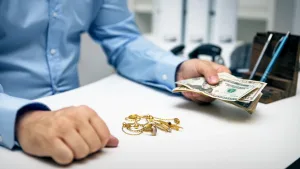

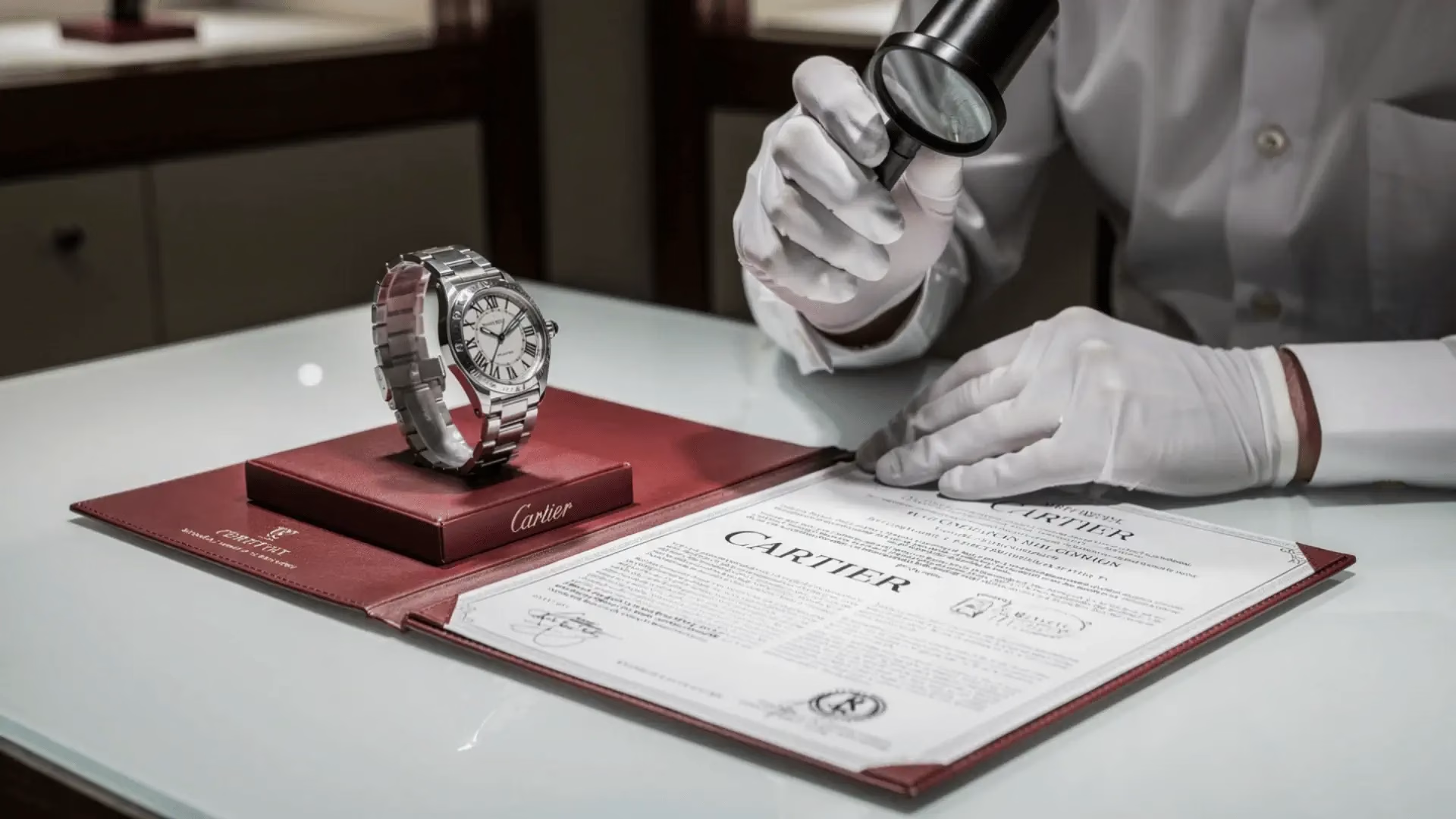
Cartier has long held its title as “The King of Jewelers” a title earned through more than 175 years of craftsmanship, royal patronage, and designs that became cultural icons. But that prestige comes with a cost: the counterfeit market for Cartier watches is massive, sophisticated, and growing every year.
Modern “super-fakes” high-resolution replicas produced in overseas workshops are no longer just cheap imitations you can spot from across the room. Some sell on grey markets for hundreds of dollars and, to the untrained eye, are nearly indistinguishable from the real thing. For buyers, the stakes couldn’t be higher.
$4.5B
Lost annually to counterfeit luxury goods globally (OECD)
#3
Cartier among most counterfeited watch brands worldwide
5
Critical authentication checks in this guide
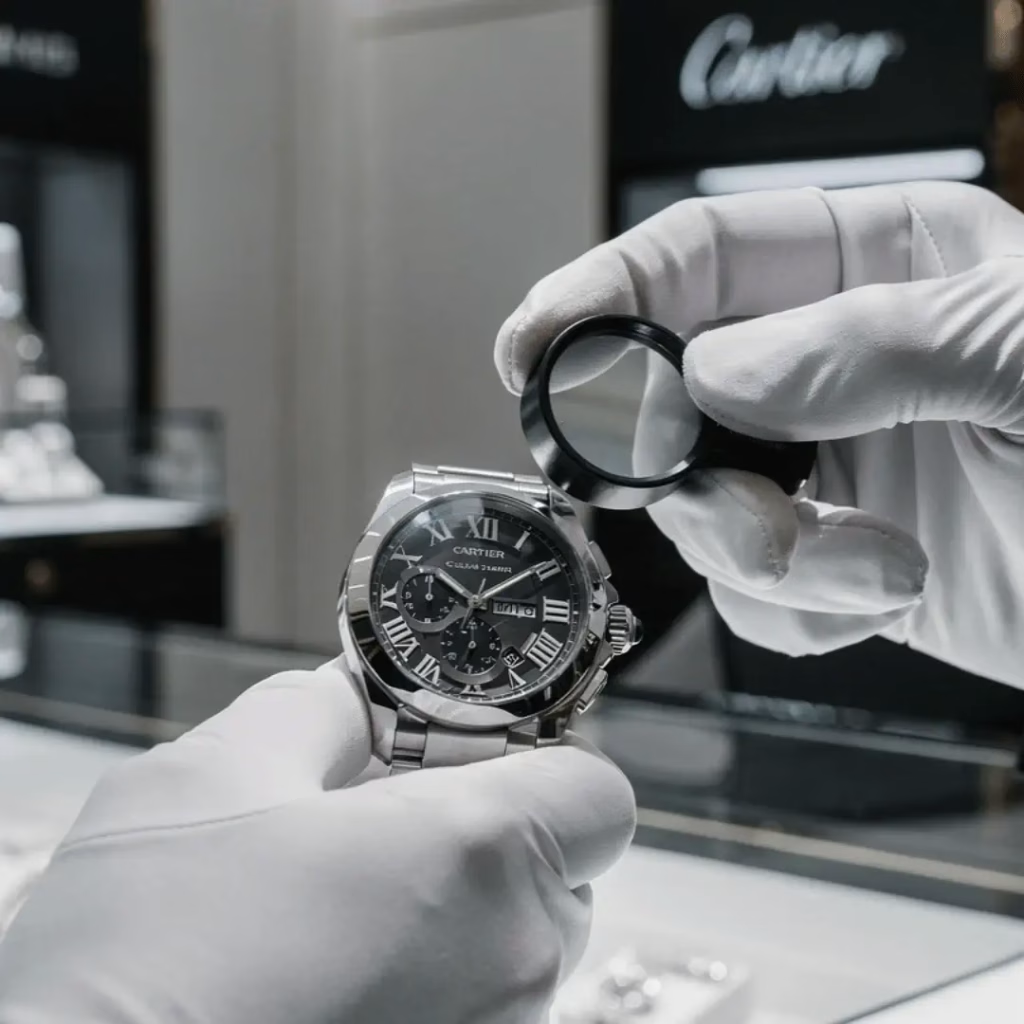
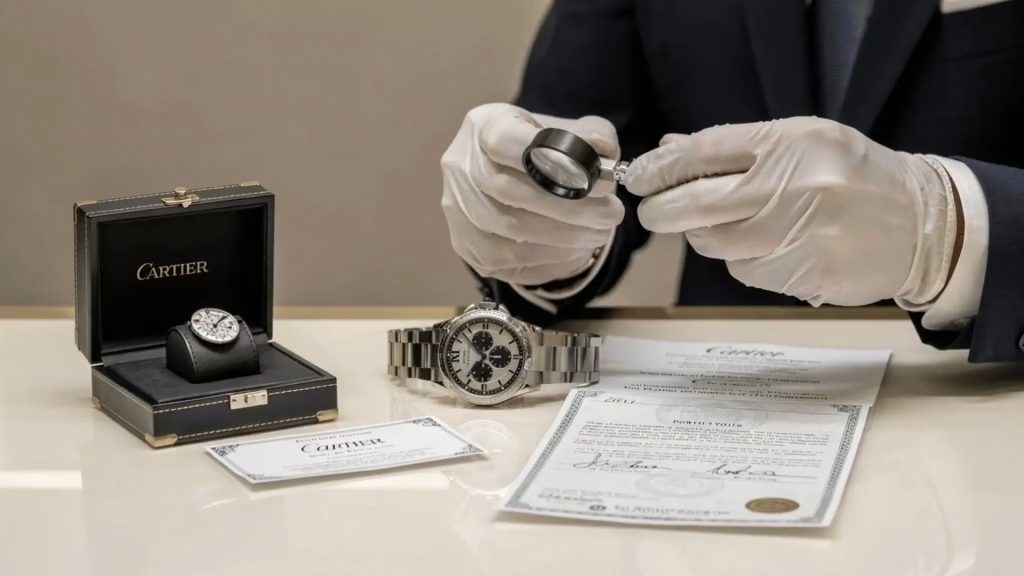
Use a smartphone macro lens attachment (often under $20) if you don’t have a jeweler’s loupe. Photograph the dial in good natural light and zoom into the image you’ll often see issues the naked eye would miss.
The “Secret” Signature Hidden in Plain Sight
One of Cartier’s most celebrated anti-counterfeit measures is its concealed signature — an Easter egg built into the dial that has been part of the brand’s design language for decades. On most Cartier models, including the iconic Tank, Ballon Bleu, and Ronde, the word “CARTIER” is hidden within one of the Roman numerals in microscopic lettering.
Where exactly to look
Examine the VII (7) or the X (10) numeral under a jeweler’s loupe or a 10x magnifying glass. One of the slender lines forming that numeral will actually spell out “CARTIER” in impossibly fine, laser-etched text. On some Tank models, it also appears within the Arabic numeral indexes.
Authentic
The hidden text is crisp, uniformly weighted, and perfectly aligned within the numeral stroke. No bleeding or distortion even at high magnification.
Counterfeit signal
The signature is missing entirely, blurry, unevenly spaced, or the wrong font weight. On very cheap fakes, the numeral itself may look thicker to compensate for poor engraving.
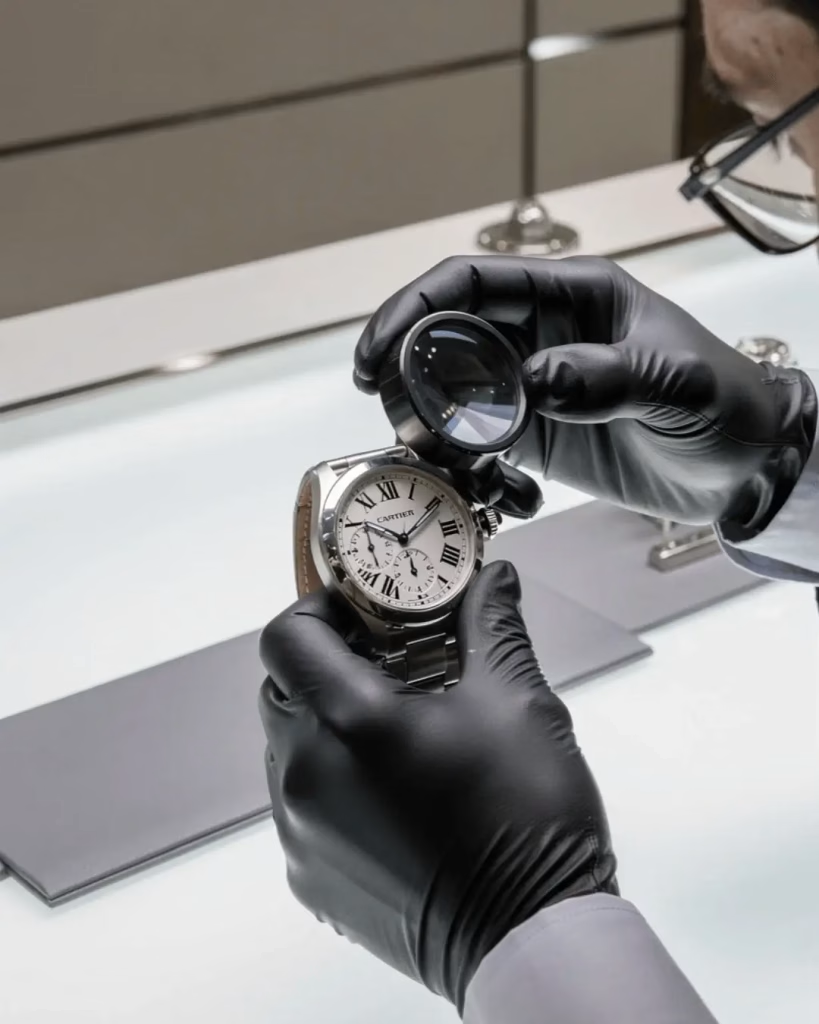
Thermally Blued Steel Hands: The Science Behind the Color
Cartier’s signature blue hands are not simply painted blue. They are the result of a traditional horological process called thermal bluing also known as heat bluing where raw polished steel is carefully heated to temperatures between 280°C and 320°C. At this precise temperature range, an oxide layer forms on the surface of the steel, producing a deep, iridescent cobalt blue that is integral to the metal itself.
This process is expensive, time-consuming, and requires extraordinary skill. It’s one of the reasons genuine Cartier dials carry their price tag and one of the first things forgers cut corners on.
Check our blog:
How to test them
Look at the hands from multiple angles under a light source. Genuine thermally blued hands will exhibit a subtle shift in tone as you tilt them slightly greener or violet-tinged at certain angles. This optical depth is an inherent property of the oxide layer and cannot be replicated with paint.

Firmly set, smooth, and deeply saturated. No movement when pressed. The bezel surrounding it is cleanly polished metal with uniform edges
Plastic or glass “stones” that feel slightly warm (real sapphire stays cool), may rock slightly, show surface scratches, or have a cloudy/glassy look rather than depth. Visible glue residue is a definitive red flag.
Touch the stone to your cheek or lower lip. Genuine sapphire (even synthetic) conducts heat away quickly and feels cool to the touch. Glass is slower; plastic feels slightly warm or neutral. This test works at room temperature in seconds.
The Cabochon Sapphire Crown: Small Stone, Big Tell
Perhaps the most recognisable detail on a modern Cartier is the jeweled winding crown — a dome-cut stone called a cabochon set into the crown at the 3 o’clock position. On most current-production models, this is a synthetic blue spinel or synthetic sapphire, precisely set in a metal bezel.
The cabochon is a signature so important that Cartier refers to it as a defining element of the brand identity. Its quality tells you a great deal about the watch it’s on.
What to check
Gently run your fingernail across the stone it should be completely smooth, with no catching or wobble. The color should be a deep, consistent blue with no milky cloudiness. Under magnification, a real synthetic sapphire has a glass-like clarity; it may show minor inclusions, but never surface crazing or visible adhesive at the setting edge.
“Cartier engravings are executed with the same precision as the watchmaking itself not as an afterthought, but as a continuation of craft.”
Caseback Engravings & Serial Numbers: Reading the Pedigree
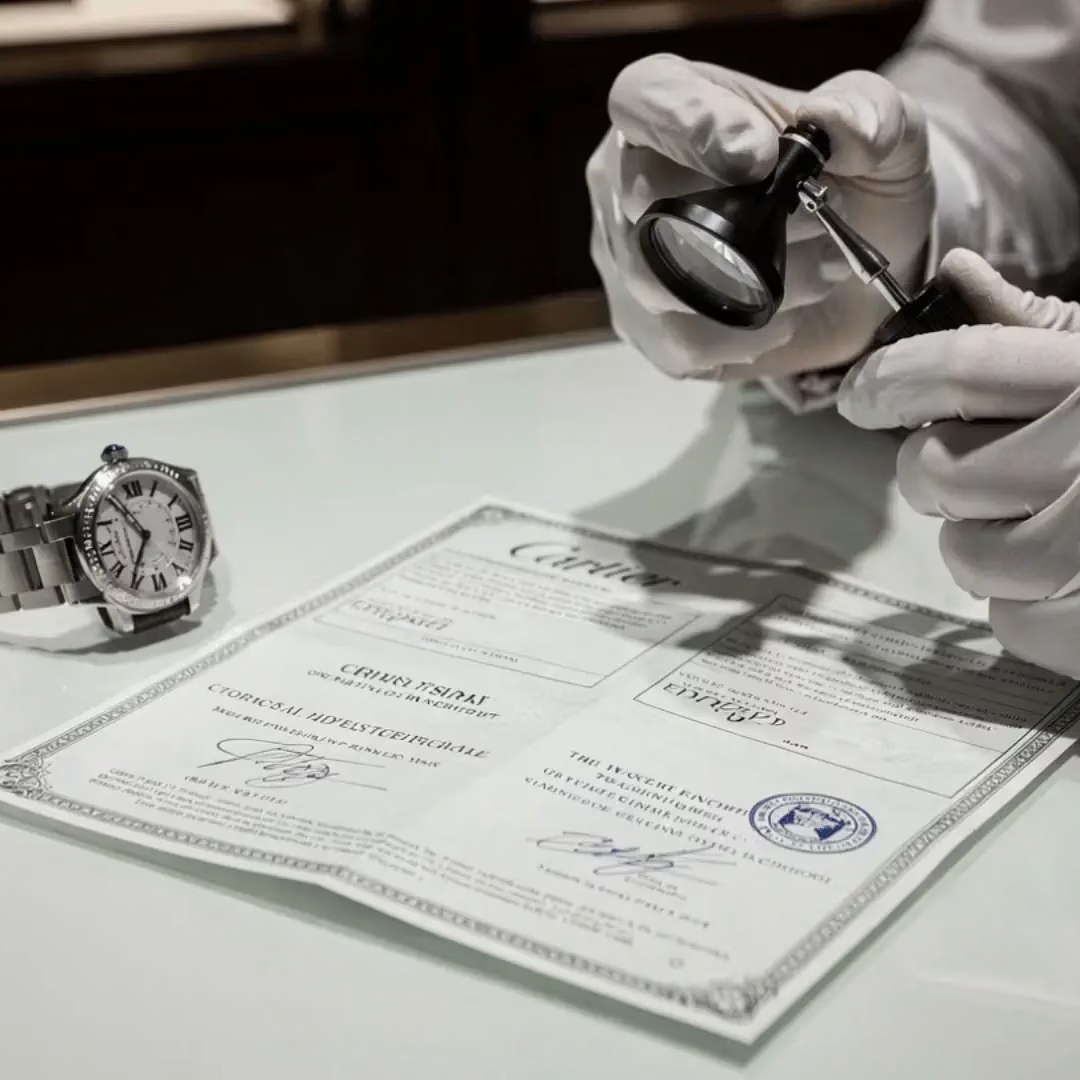
The caseback of a genuine Cartier watch is like an identity card. Every piece of information engraved there is intentional and executed to an exacting standard. Learning to read it is one of the most powerful authentication skills you can develop.
What should be present
A genuine Cartier caseback will typically include: the Cartier wordmark, water resistance rating, the metal purity marking (such as “750” for 18k gold, “950” for platinum, or “Stainless Steel” in full), a reference number, and a unique serial number. Some models especially high-end complications also display the movement caliber.
The depth, uniformity, and sharpness of the engraving is key. Cartier uses laser and CNC methods that produce crisp, even lettering with consistent depth. You can cross-reference serial numbers and reference numbers using WatchBase or the official Cartier Services portal (a Cartier boutique can verify authenticity directly from the serial).
Free Appraisal & Side-By-Side Comparisons
Use your assets wisely! You should never feel pressured to sell the jewelry you love just because you need liquidity.
Visit a professional for a cash-based, no-credit inquiry loan and get the funding you need without selling the pieces you love.
Ready to see what your item is worth? Visit us today for a fast appraisal and leave with cash or a secure pawn ticket whichever suits your goals.
Frequently Asked Questions
Q: How can I tell if a Cartier watch is real by looking at the dial? A: One of the most reliable methods is checking for the “secret signature.” On most authentic Cartier Tank and Ballon Bleu models, the brand name is printed in microscopic letters within the VII (7) or X (10) Roman numeral. Additionally, look at the thermally blued steel hands; they should appear deep cobalt blue and shift in tone when tilted under light, whereas fakes often use cheap blue paint that looks flat and one-dimensional.
Q: What is a Cartier cabochon and how do I verify it? A: The cabochon is the polished, dome-cut blue stone set into the winding crown. A genuine Cartier uses a synthetic spinel or sapphire that is cool to the touch and perfectly smooth. To spot a counterfeit Cartier, look for “stones” made of plastic or glass that feel warm, show surface scratches, or have visible glue residue around the edges.
Q: Do all Cartier watches have serial numbers? A: Yes. Every authentic Cartier features a unique serial number and a reference number (model code) engraved on the caseback. These engravings should be crisp, deep, and perfectly aligned. In 2026, you can often verify these numbers through the Cartier Care digital portal. If the engraving looks faint, “acid-etched,” or crooked, it is a major red flag for a super-fake Cartier.
Q: Is it possible to pawn a Cartier watch without original papers? A: While having the original box and papers increases the value and speeds up the pawn shop appraisal, you can still get a collateral loan without them. Professional appraisers at a luxury watch pawn shop use tools like jeweler’s loupes and movement analysis to verify authenticity. However, bringing your original sales receipt or service records will always help you secure a higher cash offer.
Q: Will a local pawn shop buy a Cartier watch if it isn’t running? A: Most luxury jewelry buyers and pawn shops will still purchase or loan on a non-running Cartier, provided it is authentic. The value will be adjusted based on the estimated cost of a Cartier factory service or movement repair. Because Cartier watches hold significant resale value in their gold, platinum, and “DNA” design, they remain high-value collateral even if they need a battery or mechanical overhaul.
Q: How do I find a trustworthy Cartier watch buyer in Houston or McAllen? A: Look for a dealer with specialized horological expertise rather than a generalist. A trusted jewelry pawn shop should be transparent about current secondary market trends, use professional testing equipment, and provide same-day cash offers. Check for high ratings and a physical storefront where you can get a face-to-face evaluation of your luxury timepiece.
Q: Why do genuine Cartier hands look different than replicas? A: Genuine hands undergo thermal bluing, a process where steel is heated to exactly 280°C–320°C to create a natural oxide layer. This results in a vibrant, iridescent blue. Counterfeit Cartier watches usually use blue paint, which lacks the metallic “glow” and depth of true heat-treated steel.
Don’t settle for guesswork. Visit us today for a Free Professional Appraisal and see the difference a side-by-side comparison makes. Whether you need a short-term bridge loan or a long-term financial solution, our experts are here to help you get the best market value for your jewelry.
Contact Houston Loan & Jewelry today for a professional appraisal and an immediate offer.
Questions about your loan?
📍 Visit us at 1801 Durham Drive, STE 7 Houston, Texas 77007
📞 Call us at (713) 766-2919
📧 Email: houstonjewelryloan@gmail.com
We’re here to help you get the cash you need without the stress.
Silver Is Now Legal Tender in Texas: What Houston Silver Bullion Owners Should Know in 2026
Buying or Selling Silver: 10 Tips That Get You the Best Price

Precious Metals Explained: What Really Decides the Value of Your Gold, Silver, and Platinum